6 Best Audio Converters for Mac in 2026

Sometimes you need a smaller audio file to share; other times, your editor just wants a different format. Here are six Mac options I found for those jobs, with quick steps for each.
1. How to Convert
Mac, Windows, Linux · $29 once
This is the one I made. It handles almost any file, so you can convert a recording here and use the same app for photos, video and documents. It finds and runs the conversion tools for you.
1. Add your files. Drag your recordings into How to Convert.
2. Choose the output and convert. Choose the output you need, such as WAV or MP3, and click Convert.
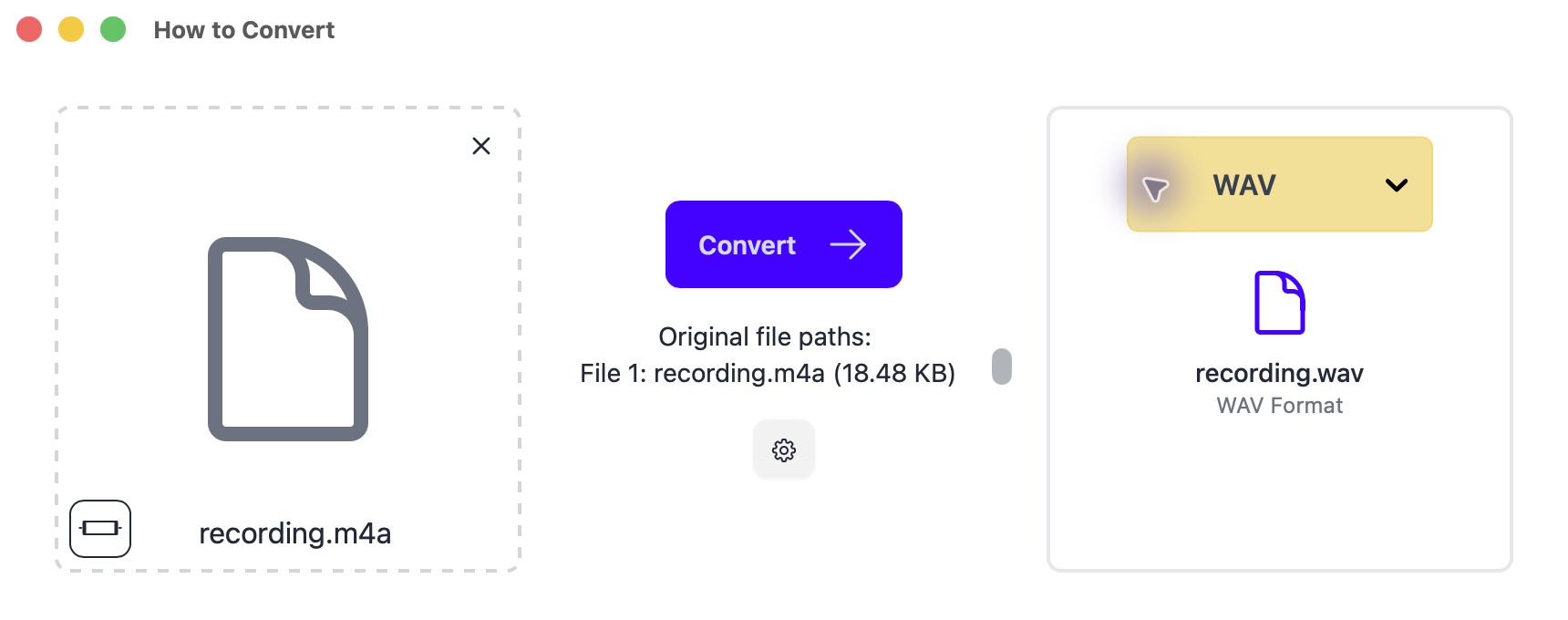
M4A to WAV shown here. Choose your output format in the menu on the right.
WAV defaults to 16-bit. For a 24-bit recording, select 24-bit in the conversion settings.
Other options
2. MediaHuman Audio Converter
Mac, Windows, Linux · Free
A free, focused audio converter with a format menu and batch queue. A good fit when you do not need editing tools.
- Open MediaHuman Audio Converter and drag your audio file into the window.
- Open the format menu. For a sharing copy, choose MP3; 192 kbps is a reasonable starting point. For editing, choose the format your editor requests.
- Choose an output folder and start conversion. Play the new file before sending it.
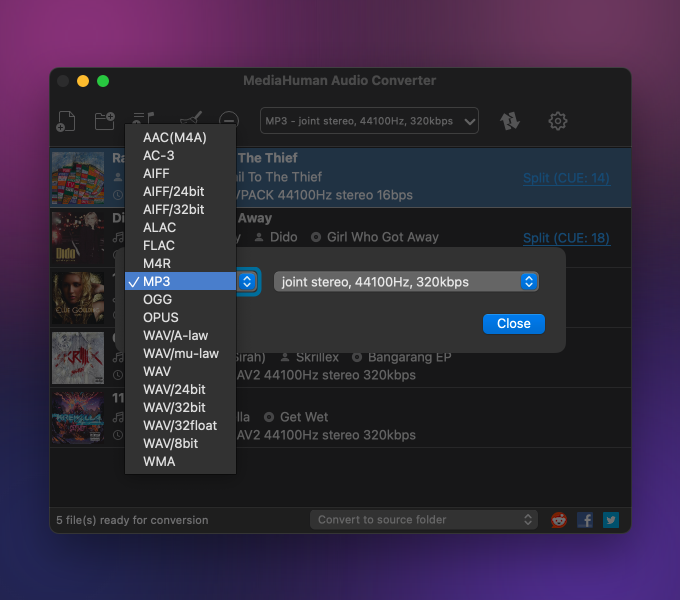
Keep the original for future edits. A larger WAV does not improve a compressed recording.
3. XLD
Mac · Free
A free Mac option for lossless music libraries.
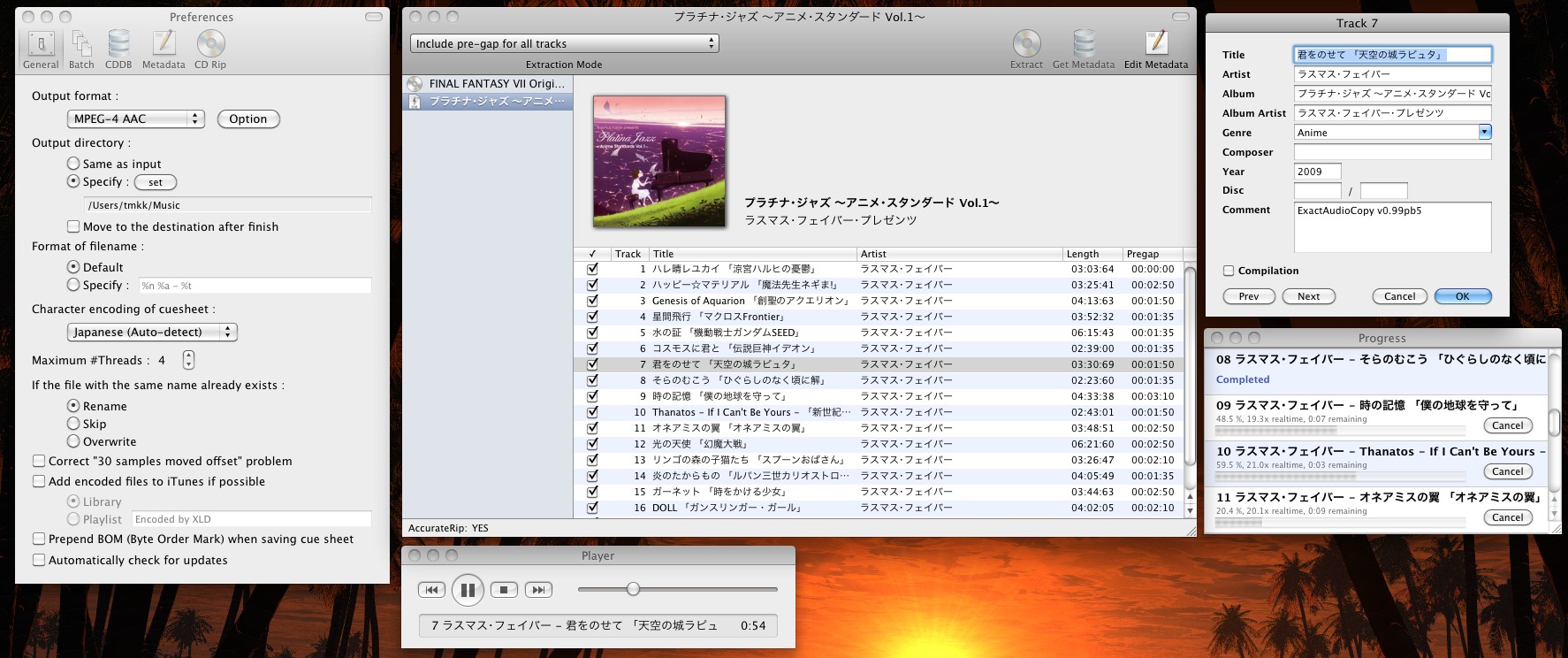
- In XLD → Preferences, choose WAV as the output format.
- Open your audio files in XLD, choose a destination if prompted, and let the batch finish.
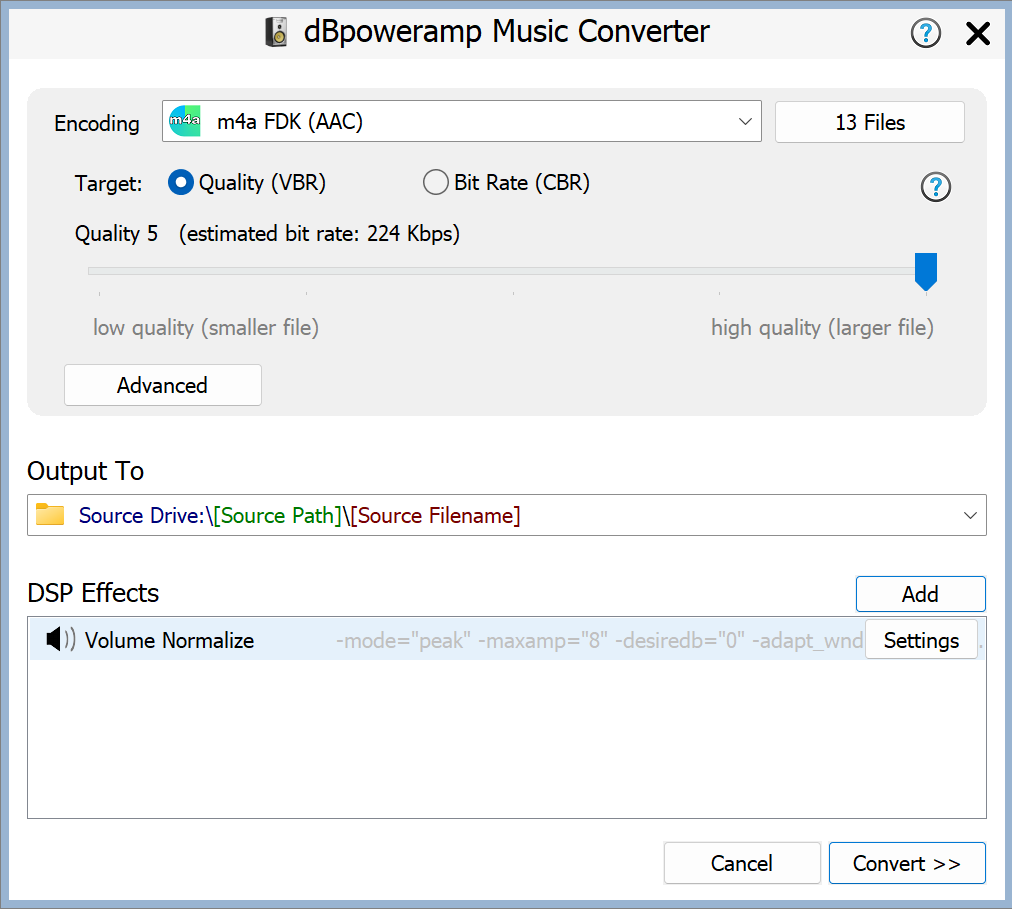
4. dBpoweramp
Mac, Windows · Paid; free trial
Useful for large music libraries and keeping track information with your files.
- Open Music Converter and select your recordings; use Batch Converter for folders.
- Choose WAV, keep the original sample rate and bit depth, select a destination and click Convert.
5. Audacity
Mac, Windows, Linux · Free
Use this when a recording also needs trimming or editing.
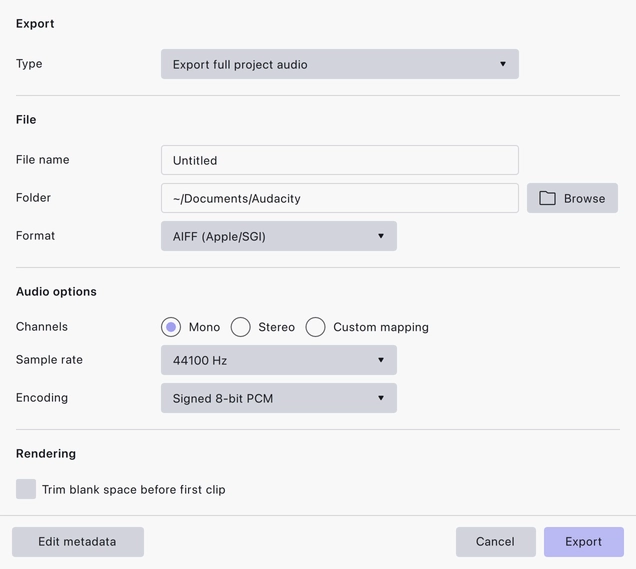
- Open the recording in Audacity and make any edits.
- Choose File → Export Audio, select WAV or MP3, then export.
6. Apple Music app
Mac · Included with macOS
Handy for tracks already in your library; protected subscription downloads cannot be converted.
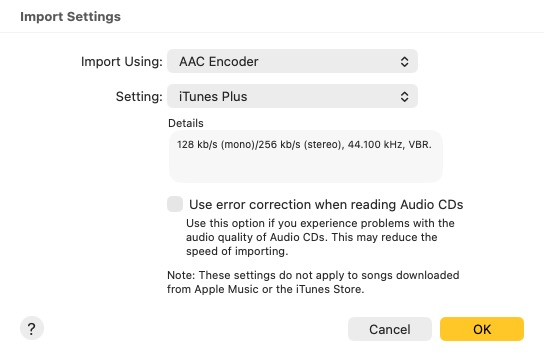
- In Music → Settings → Files → Import Settings, choose the output encoder, such as MP3.
- Select your songs, then File → Convert → Create MP3 Version (or your chosen format).